NatureNib
Published in Press
My writing right with insight and passion has rightfully borne 700 articles on ecological issues in the pages of newspapers, magazines and websites…

Crocodile chronicles
Though roaming on the earth's surface since pre-historic times, 17 out of 23 crocodilian species are endangered today due to human folly She was young, vivacious and vacationing with her boyfriend in the idyllic Andaman Islands. All of a sudden she simply disappeared during a snorkelling session in the blue-green waters. The police suspected the boyfriend for her death but her own underwater video camera captured something more dramatic. The last images of the panic stricken woman, as she drowned to death, showed the culprit was a famished estuarine crocodile.
-
Farmers of the forests
The bulky beaked hornbills, known for their perseveranceand seed dispersal skill, are facing the threat of vanishing woodlands and mushrooming concrete jungles Bangalore to Beijing and Baghdad to Bangkok there will be no husband worth his weight in gold when compared to the hornbill. A bird blessed with immense patience and perseverance in the world of bird brain - a definition with which human beings tend to delight in describing other creatures. Taking this into cognisance, recently the Environment Ministry declined a proposal to set up a RADAR installation on a secluded Island in the Andamans - thus saving the remaining 300 wild Narcondam Hornbills from extinction.

A lifeline under siege
Though they play a vital role in sustaining the eco-system, the country's natural wetlands are falling prey to rising pollution and urbanisation The World Wetlands Day (WWD) was observed sporadically across India on February 2 and yet many of us are not aware about the richness and necessity of wetlands in our lives. While wetlands are nature's water storage and water purification zones, they are also a paradise for wildlife, fishing, angling and bird-watching, water sports, relaxation and rejuvenation. Scientists believe that wetlands are the kidneys of nature. Unfortunately, wetlands today have become mere dumping grounds for garbage, rapidly throttling the water bodies.

Shrinking space for the high flyer
Steady encroachment of marshlands and rampant use of pesticides is pushing the graceful Sarus Cranes to the verge of extinction With their habitats shrinking fast to make way for the 'green revolution', the lanky, handsome Sarus caranes - the tallest flying birds in the world - are increasingly staring at an uncertain future. Primarily found in India, the Sarus cranes stand gracefully at six feet, towering over even the average Indian male human being. Other tallest birds - the African ostrich and Australian emu - cannot fly with their rudimentary wings.
-
The return of the native
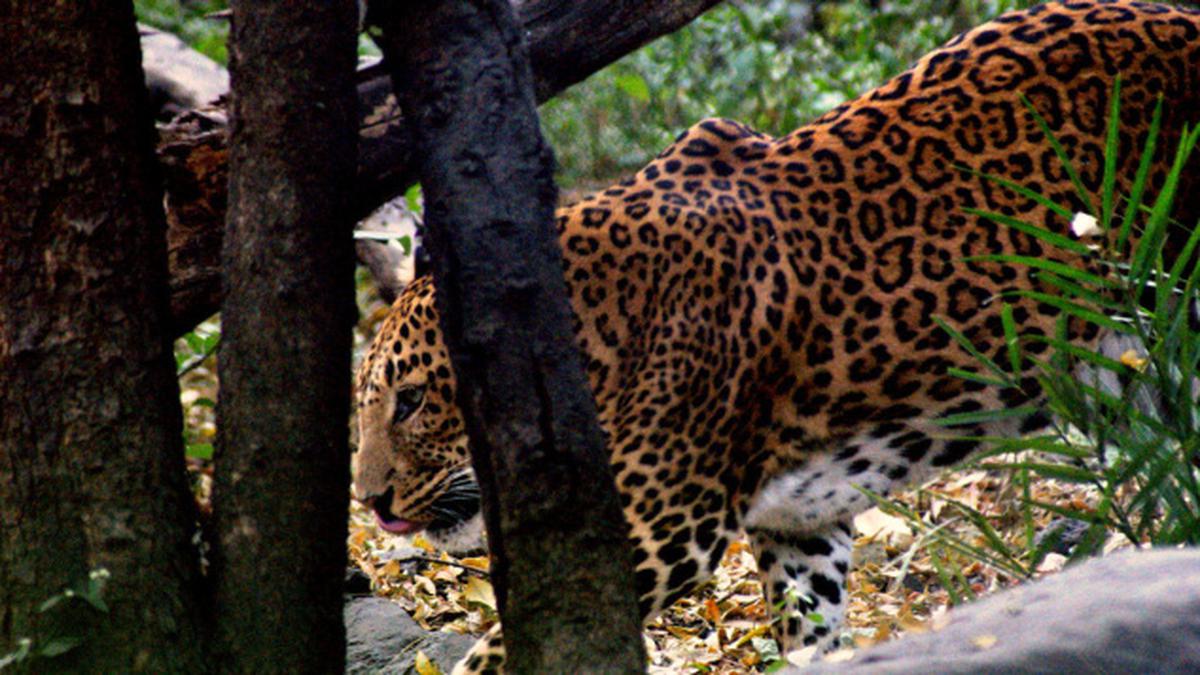
The recent Supreme Court directive to reintroduce Asiatic lions in Madhya Pradesh's Kuno sanctuary will help give them a second lease of life, feel experts India was the only country in the world to have five big cat species until recently. While the mile-a-minute cheetah has lost the race to survive in India, the tiger has its back to the wall, the sinewy snow leopard is barely surviving in its Himalayan abode, the Asiatic lion is languishing in its only tiny territory and the nimble leopard is maligned across the nation.

Off the beaten track
Wildlife watching is a tricky occupation and to conduct the arduous task of wildlife census non-stop from noon-light to moonlight is even more complicated. Despite the prevailing heat conditions and a sizzling temperature of 44 degreess Celsius, a full-scale wildlife census was recently conducted at Sariska and Ranthambhore wildlife sanctuaries in Rajasthan.
On the mammal trail
A wildlife tome focuses on the variety of mammals found across South Asia, their distribution, behavioural aspects and issues affecting their survival Mammals on our planet make up one of the smallest groups, with just 5,490 members and South Asia is privileged to have about 600 wild mammals and probably a few of them are still hidden in jungles that are waiting to be discovered and documented. To compile many of these creatures in nearly 766 pages, over 75 authors in about 15 years have amassed diligent details of 574 mammals in a bulky publication. The two-volume book is titled A Complete Guide to the Mammals of South Asia.

When the clouds collapse
Cloudbursts - the 'culprit' for the Uttarakhand deluge - are difficult to predict and on the rise due to changing weather patterns The devastation that ravished Uttarakhand recently will soon be forgotten without any remedies rendered, even as experts continue discussing what needs to be done or not to avoid any such future calamities.

Marmots caught off guard
Increased tourist influx in the Leh-Ladakh region is taking a toll on the natural habitat and way of life of Himalayan marmots There are no trees, no telephones and no rain. Only barren rock faces and jagged mountains piercing the sky are seen all round. The higher you travel into the mountains, the colder it gets - taking your breath away both by its brashness and magnificence. Even though the slanting sun stabs your facial skin with its warmth, it is the chilly winds that gnaw at your bones even at high noon in the barren landscapes of Ladakh.
-
The lion's second coming
An expert committee has been set up to expedite the smooth translocation of some Asiatic Lions from the Gir forest in Gujarat to the Kuno Wildlife Sanctuary in Madhya Pradesh The large carnivores of India seem to be caught in controversies all the time. Not a single day passes without news in the print or electronic media about leopards being bludgeoned to death, tigers being poached for body parts or snow leopards being hunted for their precious pelt. Two other issues that hit the headlines recently were the shifting of lions ( Panthera Leo Persica ) from Gujarat to Madhya Pradesh and of cheetahs into the wild.